
Chittagong Friday, 23 October 2026
Chittagong Friday, 23 October 2026
Headline
Md. Kamal Uddin | ১২:১৫ এএম, ২০২৫-১১-০৩

Evening had quietly descended upon Cheragi Pahar. The air carried a faint scent of dust, and the mingling of rickshaw bells created an unfamiliar rhythm in the city’s fading light. I was standing in front of the VIP Tower at Kazi Deuri, waiting to go to my office. I called a rickshaw and asked the puller, “Brother, to the office—how much will it be?” He replied, “Forty taka.” I asked again, “Do you have change?” He smiled slightly and said, “Yes, brother, I do.” It was a simple exchange, a moment so ordinary that one could easily ignore it. Yet that very moment made me think deeply—how human we can be, and how cruelly inhuman we often become. Within that small act of payment, I saw a reflection of our moral world. When we reached the office, I handed him a 200-taka note. He carefully pulled some folded bills from his pocket and counted out 150 taka in return. Everything went smoothly—no quarrel, no irritation, no raised voice. But I realized that behind this calm interaction lay the importance of those two simple questions: “How much?” and “Do you have change?” Perhaps those questions had saved me from an unnecessary argument, from an act of humiliation, from losing my own humanity. Just imagine—what if I had climbed into the rickshaw without asking? What if, at the end of the ride, I had given him the 200-taka note, and he had said, “Sorry, I don’t have change”? Wouldn’t my face have tightened in annoyance? I might have snapped, “You people always have this problem—never any change!” I might have sent him to a nearby shop to break the note, silently suspecting that he might run away with my money. And if he took a little longer to return, I might have shouted, “Thief! You people are the reason this city is such a mess!”—humiliating him in front of others before walking proudly into my office.
Is that civilization? Is that what it means to be human? We, the so-called educated class, so often treat rickshaw pullers, day laborers, cobblers, or beggars as though they are lesser beings. Many of us pray regularly, speak of humanity, deliver speeches about justice and morality—but hidden behind our behavior lies a frightening cruelty. This piece I write not merely to describe, but to feel. The photograph I took today—of me paying a rickshaw puller—is more than an image. Beneath its apparent simplicity lies a profound message. It poses a silent question to every city dweller: Are we truly human, or have we become beasts wrapped in the rhetoric of “humanity”? Let us think for a moment about the life of a rickshaw puller. He rises at dawn, perhaps without milk for his child, perhaps after going hungry the night before. Yet he sets out, hands gripping the handlebars, a few coins in his pocket, a weary look in his eyes, and a small flame of hope in his heart—that maybe today will be a good day. Through the city’s heat, dust, traffic, and endless red signals, he pedals on. His body aches, but he cannot stop—because hunger never rests.
And what do we give him in return? Insults, suspicion, and disdain. We forget—he, too, is human. He, too, once had dreams. This cycle of inhumanity has slowly drained our society of conscience. We now see people only through the lens of class or money. A rickshaw puller, a tea seller, a roadside flower vendor—all face the invisible wall of social hierarchy. We pride ourselves on being “civilized,” yet never stop to think that the man carrying our weight is no less human than we are. To a rickshaw puller, your ten taka might mean a meal. To you, it’s nothing—but to him, it’s survival. So if someday someone takes ten taka more, you will not become poorer; but that man might go home with a handful of rice for his family. That understanding—that empathy—is the true measure of being human. Think again—how many of us scold a rickshaw puller in the morning, and then deliver speeches about human rights in the evening? What hypocrisy! The same man we humiliated earlier becomes the subject of our lofty rhetoric later in the day.This is a society that chants “humanity” but practices inhumanity. If we only became a little more conscious, this world could change. Before you get into a rickshaw, smile and say, “Brother, how much?” Then ask, “Do you have change?” If not, find it yourself. You can easily get change in your own familiar places; he cannot. He is a stranger in this city—sweating in the sun, soaked in rain, grinding through the day not for glory but for survival. And yet, he never asks for pity—only for a little respect. To be human is not merely to be educated; it is to be compassionate. A simple thank you, a gentle smile, or the words “It’s okay, brother, keep it today”—these small gestures might lift the burden of someone’s entire day. You never know—perhaps your kindness will give him the courage to keep living.
A rickshaw puller does not just carry you to your destination; he tests your conscience every day. How you treat him defines how human you truly are. The picture I took today is not just a scene of paying a fare—it is a reflection of our society. A mirror that reveals how selfish, arrogant, and unthinking we have become. When we blind ourselves with pride in our class, wealth, or status, we give birth to cruelty. So today, through this writing, I call upon everyone— See the rickshaw puller not merely as a service provider, but as a fellow human being. Honor his sweat. Respect his labor. Let there be no trace of contempt on your face when you ride, but instead, the warmth of empathy. Our worth as human beings is not measured by what we know, but by what we feel. The rickshaw puller may not know your name, but that gives you no right to treat him without humanity. He carries you with his physical strength; you can at least offer him a “Thank you.” To respect a rickshaw puller is to honor humanity itself. A society that cannot respect its workers can never be enlightened. Remember this— On the pedal of a rickshaw, not only the wheel turns,
but also the wheel of our humanity. And to pass that test of humanity, you don’t need a big degree— you just need a heart. Take off the mask of false civility—look once into the eyes of a rickshaw puller. You’ll see that humanity is still alive there.


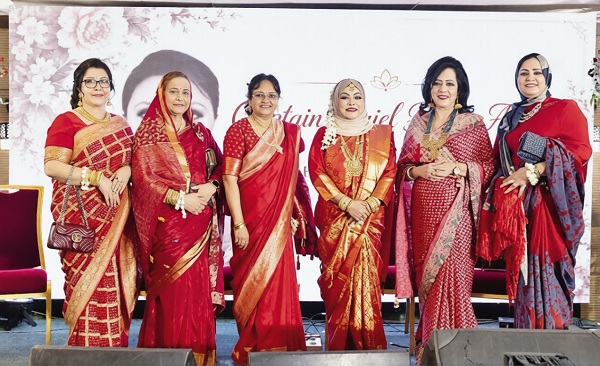
Special Desk : : Shohel Rana : On last Saturday( 12 September) at Six Seasons Hotel in Dhaka, Banani Women’s Club organised a grand luncheon and introduction ceremony to welcome its Executive Committee (EC) members and new members. The gathering was held. All members ...বিস্তারিত
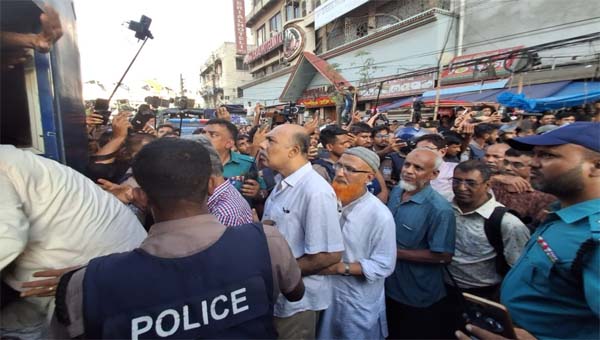
National Desk : : Maksud Ahammed: DMP(Dhaka Metropolitan Police) detained ‘more than 300 activists of the banned AL from the main office of the Jatiya Samajtantrik Dal- JASAD at Gulistan’s GPO intersection in Dhaka on Saturday afternoon.According to Police Sou...বিস্তারিত
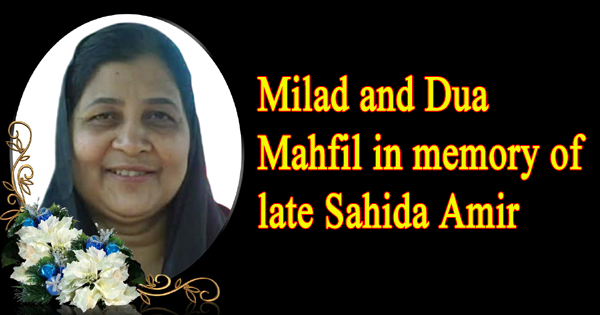
National Desk : : Benjamin Rafiq: A Milad and Dua Mahfil was held on Friday (September 18) after Jumu'ah prayers for Sahida Amir (63)—wife of the late Amir Khan and mother of Sajjad Khan(former Joint Convener of Motijheel Thana Jubo Dal), as well as Raju Khan and Riad...বিস্তারিত
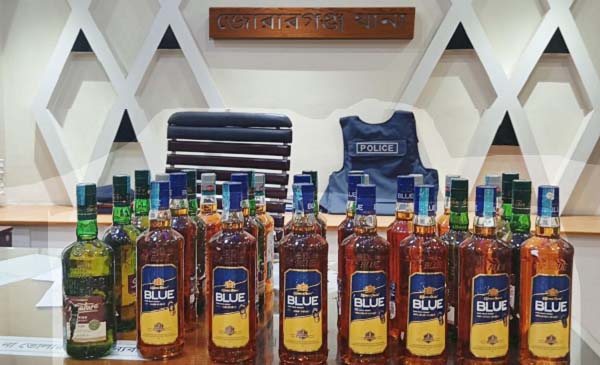
National Desk : : Md Masuduzzaman Rajib: During the anti-drug operation of Zorarganj Thana Police in Mirsarai Circle, Chittagong district, a team of Zorarganj Thana Police recovered 30 bottles of Indian liquor hidden in sacks of Pumelo fruit from a locked room of the one-storey...বিস্তারিত
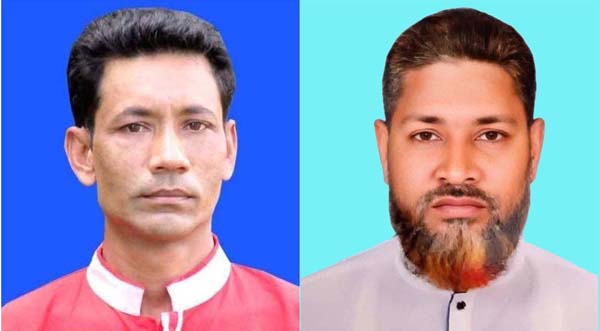
National Desk : : Ramgati (Lakshmipur) Correspondent: Keeping in mind the policy of 'uncompromising in publishing the truth', a new executive committee of 'Ramgati Press Club' has been formed by merging three journalist organizations active in Ramgati, Lakshmipu...বিস্তারিত

National Desk : : News desk: Today, July 21, at 6 pm, a discussion meeting and prayer mahfil were held in memory of the July martyrs at the regional office of the Teachers' Association in Kazir Deuri under the chairmanship of M.A. Chafa Chowdhury, President...বিস্তারিত



National Desk : : Maksud Ahammed, Returend from Rupganj (Narayanganj): An allegation has been made against the headmaster of the school for selling government trees in the premises of Pitalganj Brahmankhali Government Primary School No. 23 in Rupganj Upazila of Narayanganj...বিস্তারিত
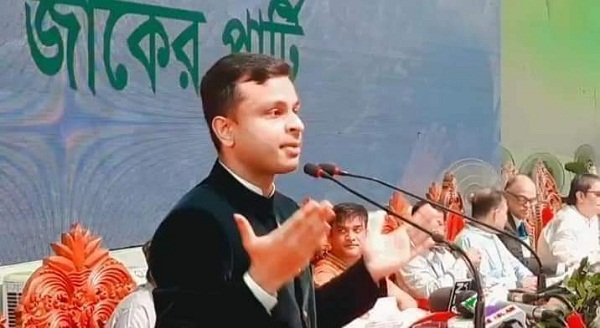
National Desk : : Alom Khan, Sibpur(Narshingdi) correspondant: Investing is not gambling; there is no room for emotional vulnerability in investment decisions. It is a measured and calculated quantitative and logic-driven investment decision. The stock, commodity, forex an...বিস্তারিত


© সর্বস্বত্ব স্বত্বাধিকার সংরক্ষিত ২০১৯ - © 2026 The DailyTourist BD | Developed By Muktodhara Technology Limited