
Chittagong Friday, 23 October 2026
Chittagong Friday, 23 October 2026
Headline
Md. Kamal Uddin | ১০:৪০ পিএম, ২০২৫-১২-০২

By Md. Kamal Uddin
The glamorous world of Miss World and Miss Universe is often portrayed as the pinnacle of global appreciation for beauty, talent, and womanhood. Yet behind the dazzling lights and the thunderous applause lies a difficult question—do these competitions truly honor women, or do they transform their bodies into commercial products? Before a woman can participate in such contests, she must pass through a series of strict conditions— She must be between 17 and 27 years old She cannot be married. She cannot have children. She must win her national competition before entering the global stage She must maintain physical attractiveness, fitness and a photogenic appearance Though these contests claim to look “beyond beauty,” the reality shows otherwise. Contestants are judged in multiple rounds—evening gowns, swimwear or beach fashion, ramp-walking, body posture, facial symmetry, grooming, charisma, and finally a question-answer segment meant to test general knowledge and social awareness. Contestants must also present a “Beauty With a Purpose” project—often related to education, poverty, health, or environmental issues. This creates the impression that modern beauty competitions celebrate intellect, leadership, and humanitarian ideals. Yet the entire system revolves around one central theme: the public display of a woman’s body for evaluation.
Islam’s Perspective: A Woman’s Dignity Lies in Her Modesty, Not Her Exposure Islam gives women the highest degree of dignity and respect. The Qur’an does not instruct a woman to reveal her beauty before strangers; rather, it commands, “And tell the believing women not to display their beauty except what is apparent.”
(Surah An-Nur: 31) But in beauty competitions, women must wear clothes that highlight body shape, expose private areas, and attract visual attention. They walk and pose before a panel of mostly male judges, who measure their bodies from head to toe. This is not a celebration. This is objectification. Islam even instructs men to lower their gaze: “Tell the believing men to lower their gaze.” (Surah An-Nur: 30) If merely gazing at a woman with desire is forbidden, how can placing a woman on a stage to be judged for her body be acceptable?
This is not empowerment—it is a silent humiliation. A Market of Bodies, Not a Showcase of Honor Beauty pageants are driven by billions of dollars in profit—beauty brands, fashion companies cosmetic industries, television networks, and advertisement agencies All use a woman’s body as a marketplace for commercial gain.
This system indirectly teaches women, “Your worth lies in how attractive your body is.” But Islam defines a woman’s beauty differently: her modesty her morality her knowledge, her compassion her dignity, her character, her iman (faith) These qualities elevate her in the eyes of Allah and in the hearts of people. The Historical Evolution: From Bikini Contest to Global Platform
The modern Miss World competition began in 1951, when British journalist Eric Morley arranged a small bikini festival during the Festival of Britain. The event drew unexpected public attention, and the media quickly renamed it Miss World. Miss Universe began a year later, in 1952, in the United States. The first event was sponsored by Pacific Knitting Mills, a company that made women’s swimwear. Television broadcasts in the 1950s rapidly elevated the competition into a global market.
Initially, the contests only judged external beauty. Eventually, segments like humanitarian work, talent shows, charity fundraising, and question-and-answer sessions were added to create a “balanced” image. Today, organizers emphasize leadership, social awareness, and cultural representation. Bangladesh has also stepped into this arena in recent years. And yet, despite all these reforms, the foundation remains unchanged: a woman still has to exhibit her body to be judged. The Moral Dilemma: Empowerment or Exploitation?
Beauty competitions claim to empower women—but at what cost? The pressure to maintain a “perfect figure” damages self-esteem. Young girls start believing their value is measured by physical appearance. Social media, cosmetics industries, and fashion brands intensify this pressure. This does not uplift women.
It breaks them silently. Psychologically, women face body anxiety, insecurity, and commercial exploitation. the fear of not being “beautiful enough” the belief that physical perfection equals success What society calls “empowerment” is often nothing more than a polished form of objectification.
Islam’s Verdict Is Clear: The Qur’an strongly warns women not to display themselves in the way women did during the Age of Ignorance: “Do not display yourselves like the display of the former times of ignorance.”
(Surah Ahzab: 33) Stage performances, semi-nude displays, and beauty contests contradict the Islamic principles of modesty, dignity, and self-respect. Islam elevates a woman—not through public display—but through her character and moral excellence.
Conclusion: Beauty Is Not in the Body—It Is in the Soul Miss World and Miss Universe competitions may have evolved into platforms of culture, charity and global representation. But beneath the glamour lies an undeniable truth:
They still rely on women’s bodies as the main attraction. This is not empowerment—it is commercialization of femininity, wrapped in glitter and applause. Islam offers women a higher honor. Not a crown of diamonds—but a crown of dignity, modesty, and self-respect. True beauty is not the glow of skin—it is the light of character. Not the shape of the body—it is the strength of morality.
Not the applause of strangers—it is the acceptance of the Creator.



Md. Kamal Uddin : Bangladesh stands today at a critical turning point in its history. With a renewed commitment to the people, the nation, and our sovereignty, the Freedom Party (FP), Bangladesh, is returning to the national arena. Our goal is to rebuild Bangladesh as a proud, ...বিস্তারিত

Md. Kamal Uddin : Md. Max, The Daily Tourist, Cox's Bazar: I am a frequent beach stepper of the world's longest sandy beach, Cox's Bazar. I admire the scenic beauty of nature, and I try to help the foreigners by showing them around, which has been done by me fo...বিস্তারিত
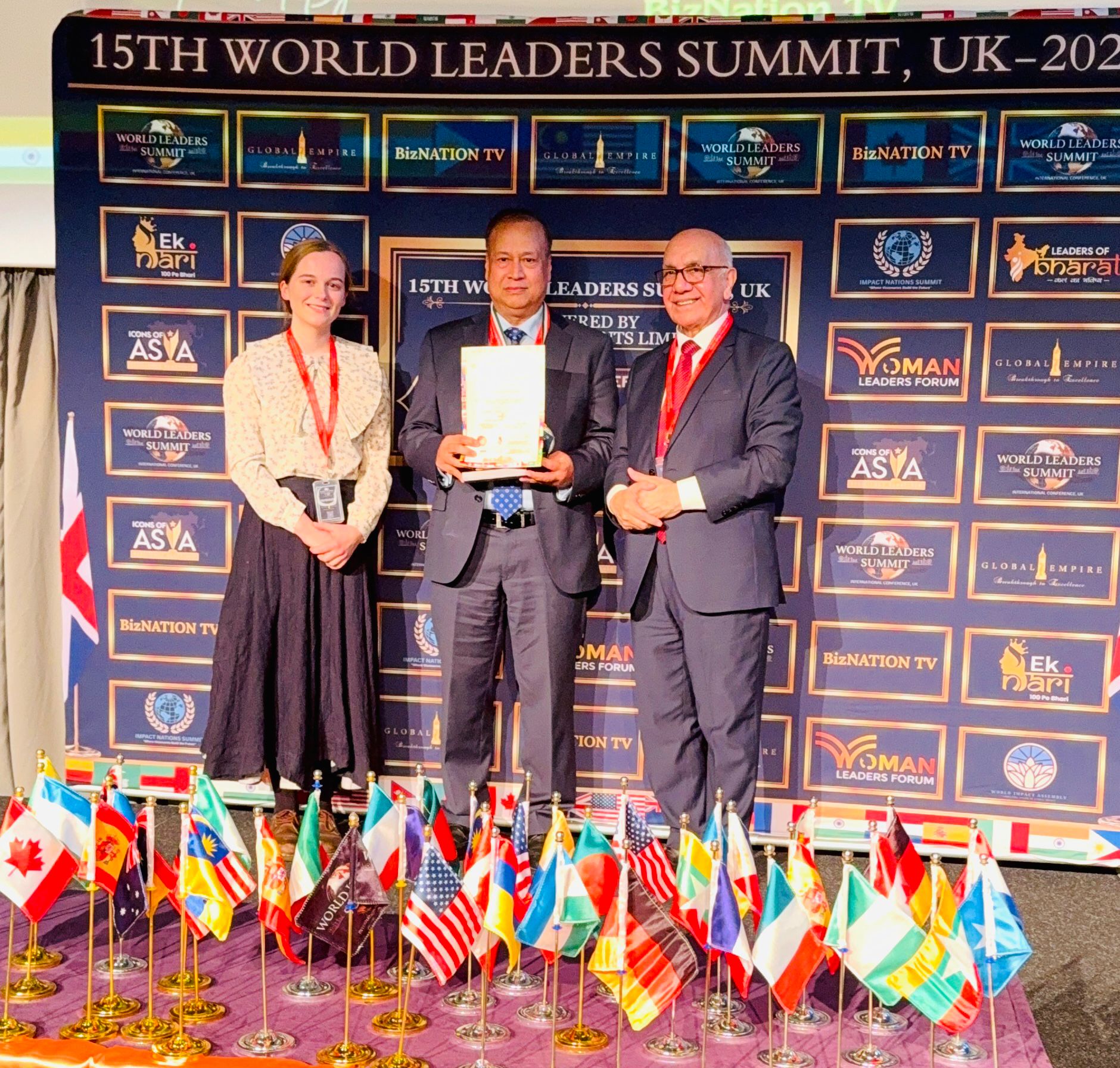
Md. Kamal Uddin : Barrister Monwar Hossain, a distinguished British-Bangladeshi lawyer, has been honoured with the prestigious Lifetime Achievement Award in the fields of law and human rights at the 15th World Leaders Summit, an international conference held at Keble Colle...বিস্তারিত

Md. Kamal Uddin : Kamal Uddin: On the occasion of International Human Rights Day 2025, observed on 10 December, M. A. Hashem Raju, President of the International Human Rights Commission (IHRC) Bangladesh Chapter and former student leader, has issued a formal statement....বিস্তারিত
.jpg)
Md. Kamal Uddin : In law enforcement, we often imagine rigidity, strategy, operations, and strict application of law. Within this frame, we rarely expect to find compassion, emotional depth, or literary consciousness. Yet sometimes, inside the uniform, resides a personality who...বিস্তারিত
.png)
Md. Kamal Uddin : Under the decisive leadership of Chattogram Metropolitan Police Commissioner Hasib Aziz, several dedicated police officers have played a pivotal role in maintaining law and order across the city, and among them, Officer-in-Charge (OC) of Panchlaish Police Stat...বিস্তারিত



National Desk : : Maksud Ahammed, Returend from Rupganj (Narayanganj): An allegation has been made against the headmaster of the school for selling government trees in the premises of Pitalganj Brahmankhali Government Primary School No. 23 in Rupganj Upazila of Narayanganj...বিস্তারিত

National Desk : : Alom Khan, Sibpur(Narshingdi) correspondant: Investing is not gambling; there is no room for emotional vulnerability in investment decisions. It is a measured and calculated quantitative and logic-driven investment decision. The stock, commodity, forex an...বিস্তারিত


© সর্বস্বত্ব স্বত্বাধিকার সংরক্ষিত ২০১৯ - © 2026 The DailyTourist BD | Developed By Muktodhara Technology Limited