
Chittagong Friday, 23 October 2026
Chittagong Friday, 23 October 2026
Headline
Md. Kamal Uddin | ০৫:৫৩ পিএম, ২০২৫-১২-০৭
.jpg)
Sabuj, the well-known youth leader of Burma Colony and a dedicated organiser of the Swechchhasebak Dal, has finally regained freedom after six long months of unjust imprisonment. The moment he walked out of the central jail yesterday afternoon, his home ground transformed into a celebration. Garlanded with flowers, greeted with banners, slogans, tears of joy and overwhelming emotion—his supporters welcomed him as though a loved one returned after a long exile. His release symbolised much more than an individual’s freedom; it was a moment of breaking the chains of political vengeance. For months, his family, colleagues and local residents repeatedly claimed that the cases filed against him were fabricated—engineered by an influential clique at the local level, aided by corrupt segments within the administration. Sabuj’s freedom, according to witnesses, has exposed these layers of conspiracy. Upon his release, Sabuj delivered a short yet powerful speech: “The people’s love has always kept me strong. I have never bowed before lies. I have faced persecution and retaliation throughout my political journey. I was oppressed during the Awami League’s tenure, and unbelievably, even as a BNP activist, I faced the same persecution when BNP was in power. Yet I will stand for truth, and I will continue my fight for justice.” As he spoke, the crowd erupted in slogans “Truth will win!” “Sabuj, move ahead!”
“Do not be silenced!” It was not just an emotional response; it was a declaration of protest against injustice. Sabuj is known not merely for his political identity but for his humanity—his support for the poor and distressed, his constant presence during crises, and his ability to stand beside anyone in need. Locals often say, “No activist ever returned hopeless from Sabuj. He never turned away from anyone.” His associates add, “Unless one meets Sabuj, one cannot understand his sincerity. He guides others like an elder brother—with kindness and responsibility.” Yet it was this very popularity that made him a target. Authorities did not allow him bail hearings, and he was imprisoned without fair investigation. Sabuj became a victim of an intentionally designed process to uproot his influence. Sabuj stated: “One cannot become a leader by surrendering to conspiracies. They tried to frighten me, humiliate me—but my inner strength never collapsed. I love my party, I respect leadership, and I will work for people’s rights as long as I live.”
Following his return, workers from Burma Colony and neighbouring areas rushed to welcome him. The streets were lined with banners, posters and chanting supporters—many embracing him in tears, as if a long-lost brother had come home.
A senior supporter said: “The case against Sabuj was ridiculous. Everyone here knows the truth. The conspirators wanted to silence him—but that has now backfired.” A gathering was later held to offer prayers for Sabuj’s health, success, and justice. Speakers expressed confidence that under his vibrant leadership, organisational activities in the area would rise to new heights.
Sabuj stated again: “I owe my life to the people, my family and all who stood by me. Even from prison, I knew injustice cannot sustain. My struggle will remain aligned with justice.”
His comeback is proof that even an ordinary worker—if backed by public trust—can stand against deep-rooted injustice. His return did not merely weaken conspirators; it revealed their faces. It was a moral victory—truth overpowering falsehood. When Sabuj walked out of the dark prison corridor after six months, fatigue and silent agony lingered in his eyes, but his voice carried the weight of an unresolved grief. Speaking to Shada Kalo Multimedia News House, he described his confinement—moments that wounded him not only politically, but emotionally. He said: “I entered politics for people. Yet I was accused as though I were a criminal. No investigation, no verification—just a name written on paper, and I was taken away. My family cried, my children trembled, and I witnessed how power can crush ordinary lives.”
Sabuj asserted that no physical evidence existed in the case, nor any real complainant. It was designed purely from political hostility.
About his arrest, he said: “When I was taken to the police station, I wondered—who dragged me into this darkness? I was not allowed to defend myself. When they sent me to prison, not a single officer said, ‘You are innocent.’ At that moment I realised—sometimes justice is nothing more than printed words.” Prison life was a psychological trial. A narrow cell, metal bars and endless silent nights—he thought at times that someone wanted him to break. Yet the fellow inmates gave him something priceless.
Sabuj said: “When prisoners told me I did nothing wrong—that was the moment I understood I was not alone.” Then his voice trembled. “The prison could not break me; it made me stronger. Those who plotted against me—their faces are now clearer than ever.”
He added: “I am a Muslim, I am a political worker. I swear, I will never seek revenge. I will stand only with truth. People stood for me—that is why I survived. When I saw the workers waiting outside, I realised—my freedom has meaning.” His testimony reveals an entire chapter of concealed oppression—its motives, its execution, its emotional consequences. But it also reveals a Police-When a man stands with conviction, people stand with him. Thus unfolds the story of Sabuj A political activist imprisoned without justice, broken but undefeated, silent in his suffering, yet ultimately restored through public faith. His freedom marks the beginning of a new march towards organised politics, towards justice, and towards reclaiming dignity. Truth has won and Sabuj has returned.


Md. Kamal Uddin : Bangladesh stands today at a critical turning point in its history. With a renewed commitment to the people, the nation, and our sovereignty, the Freedom Party (FP), Bangladesh, is returning to the national arena. Our goal is to rebuild Bangladesh as a proud, ...বিস্তারিত
Md. Kamal Uddin : Md. Max, The Daily Tourist, Cox's Bazar: I am a frequent beach stepper of the world's longest sandy beach, Cox's Bazar. I admire the scenic beauty of nature, and I try to help the foreigners by showing them around, which has been done by me fo...বিস্তারিত
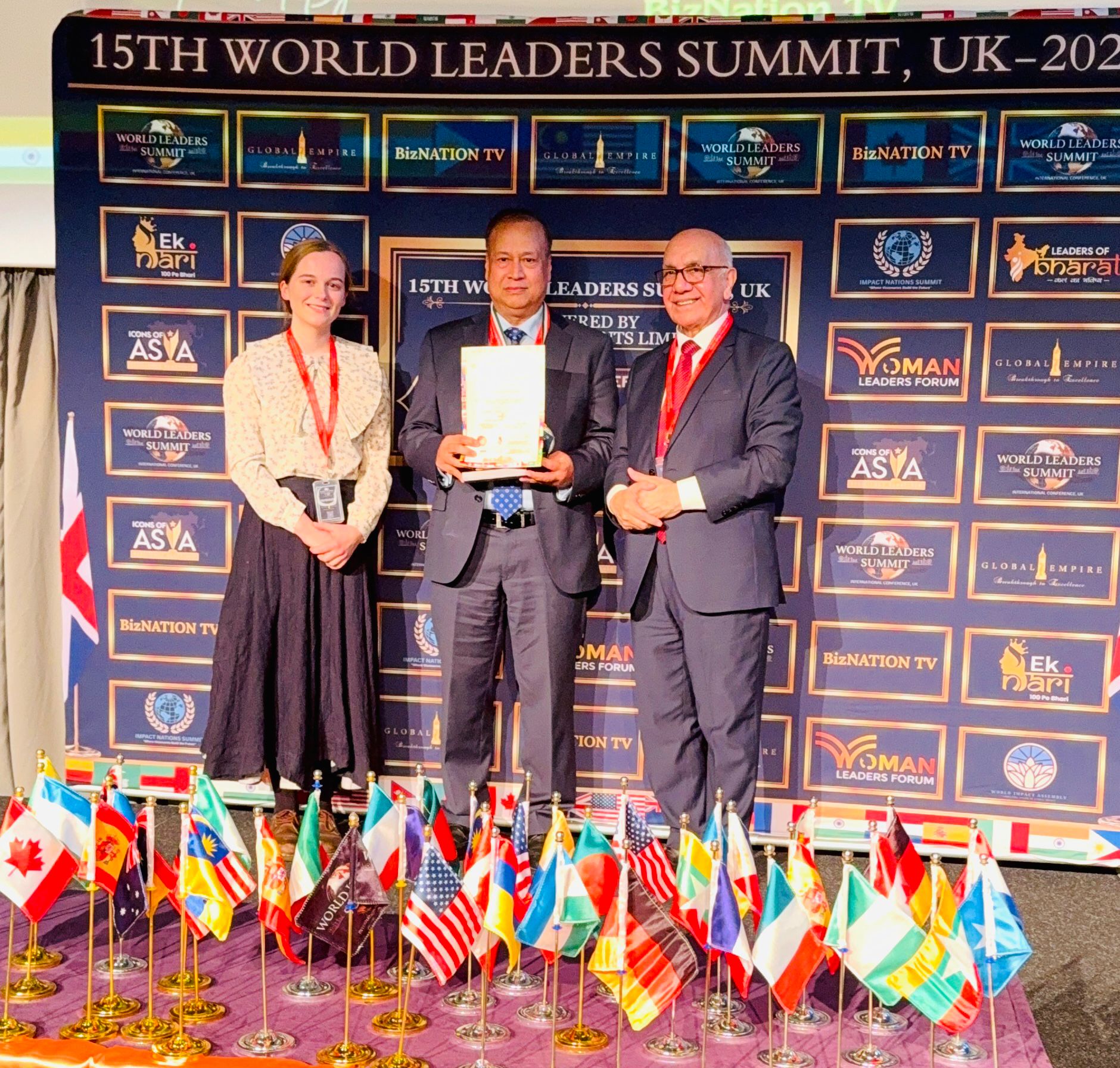
Md. Kamal Uddin : Barrister Monwar Hossain, a distinguished British-Bangladeshi lawyer, has been honoured with the prestigious Lifetime Achievement Award in the fields of law and human rights at the 15th World Leaders Summit, an international conference held at Keble Colle...বিস্তারিত

Md. Kamal Uddin : Kamal Uddin: On the occasion of International Human Rights Day 2025, observed on 10 December, M. A. Hashem Raju, President of the International Human Rights Commission (IHRC) Bangladesh Chapter and former student leader, has issued a formal statement....বিস্তারিত
.jpg)
Md. Kamal Uddin : In law enforcement, we often imagine rigidity, strategy, operations, and strict application of law. Within this frame, we rarely expect to find compassion, emotional depth, or literary consciousness. Yet sometimes, inside the uniform, resides a personality who...বিস্তারিত
.png)
Md. Kamal Uddin : Under the decisive leadership of Chattogram Metropolitan Police Commissioner Hasib Aziz, several dedicated police officers have played a pivotal role in maintaining law and order across the city, and among them, Officer-in-Charge (OC) of Panchlaish Police Stat...বিস্তারিত



National Desk : : Maksud Ahammed, Returend from Rupganj (Narayanganj): An allegation has been made against the headmaster of the school for selling government trees in the premises of Pitalganj Brahmankhali Government Primary School No. 23 in Rupganj Upazila of Narayanganj...বিস্তারিত
National Desk : : Alom Khan, Sibpur(Narshingdi) correspondant: Investing is not gambling; there is no room for emotional vulnerability in investment decisions. It is a measured and calculated quantitative and logic-driven investment decision. The stock, commodity, forex an...বিস্তারিত


© সর্বস্বত্ব স্বত্বাধিকার সংরক্ষিত ২০১৯ - © 2026 The DailyTourist BD | Developed By Muktodhara Technology Limited